Straight answers, clearly written
You receive a report that translates findings into decisions: what is likely impacted, what needs confirmation, and what to do next.
Serving Frederick, Maryland & surrounding areas
Mon–Fri 8am–6pm · Sat 9am–2pm
Get clear answers fast with a thorough on-site assessment, targeted sampling when needed, and a written report you can use to plan the next step with confidence.
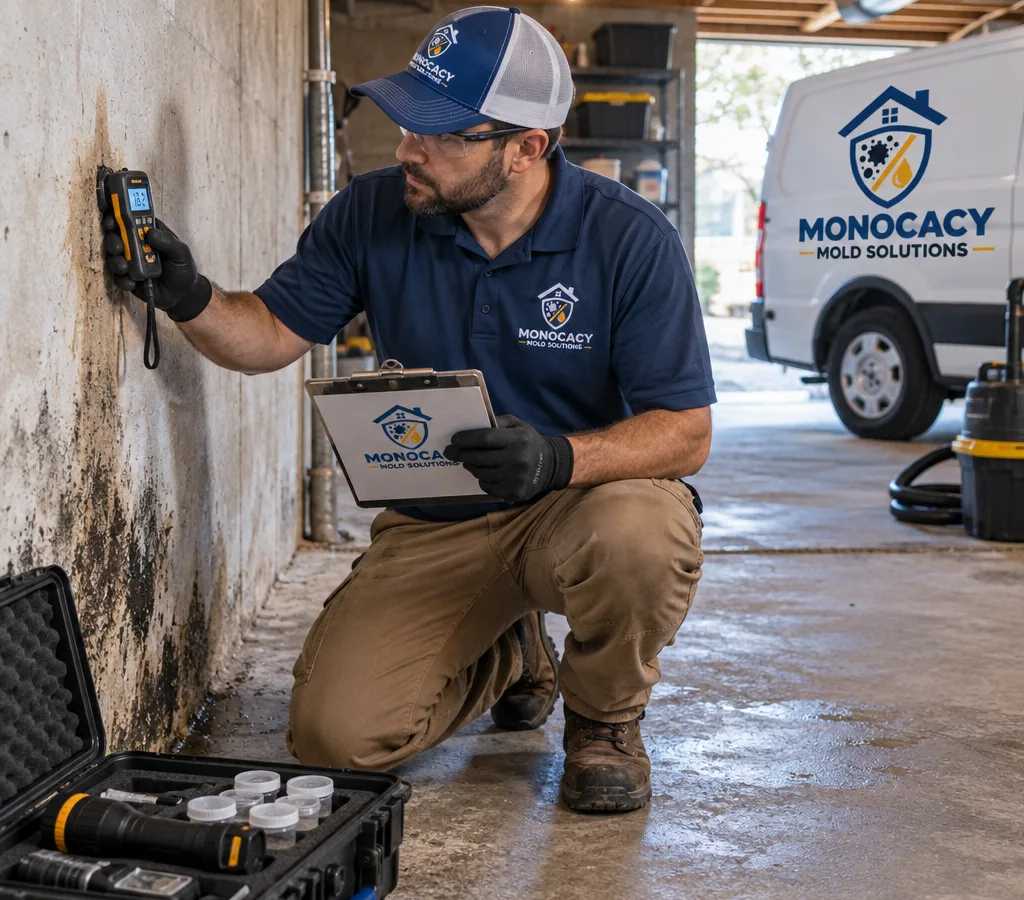
Serving Frederick homeowners and buyers with moisture-focused inspections, useful documentation, and clear guidance before cleanup or repairs.
If you are searching for mold inspection Frederick MD, you usually want one thing: reliable detection and a straight explanation of what it means. Mold can follow moisture from a small plumbing leak, roof issue, damp basement, or a humid room that does not vent well. A proper inspection focuses on where water is getting in, which materials are affected, and whether mold is likely spreading beyond what you can see.
Common reasons local homeowners and buyers schedule an inspection:
In Frederick, many homes have basements and mixed foundation types, so we pay close attention to below-grade walls, rim joists, crawlspace access points, and how humidity is controlled. Around downtown rowhomes and older properties, we also look for legacy moisture paths such as patched plaster, older window openings, and bathroom venting that was never updated.
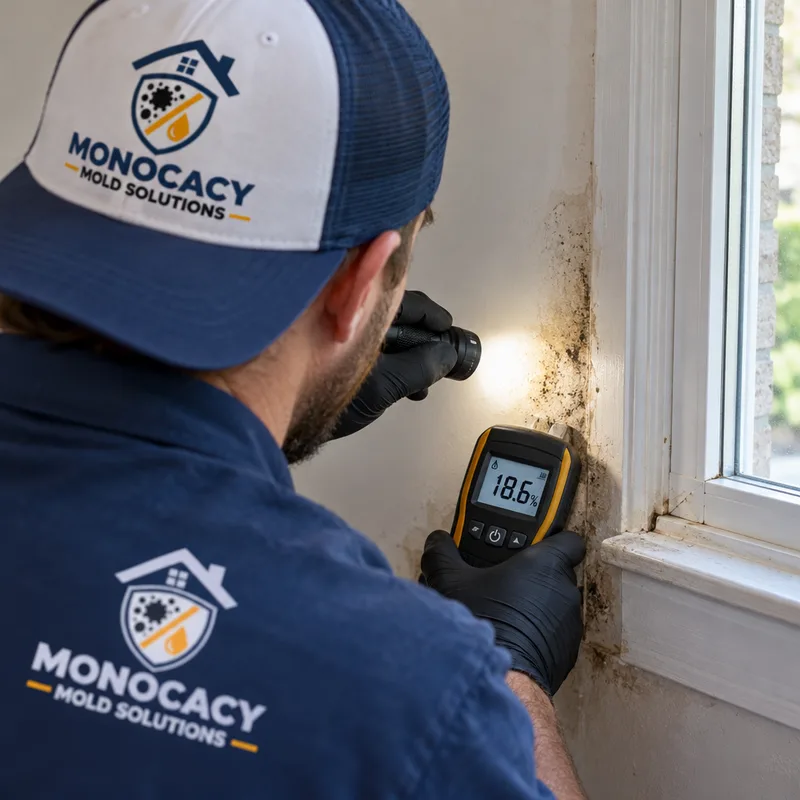
A professional inspection is more than spotting discoloration. Our job is to gather enough evidence to answer three practical questions: Where is the moisture source, how far is the impacted area likely to extend, and what documentation will help you make a safe decision about cleanup.
What you can expect from Monocacy Mold Solutions:
What an inspection does not do: It does not automatically mean demolition, and it is not a guarantee that every spore in a home can be found. The goal is to locate actionable problem areas, document conditions, and reduce uncertainty so remediation can be scoped correctly.
If you already know you want cleanup after the inspection results, reviewing what a full mold removal service involves can help align the report with containment, removal, and verification practices.
You receive a report that translates findings into decisions: what is likely impacted, what needs confirmation, and what to do next.
Mold follows water. We focus on identifying active or recurring moisture so the problem does not come right back after cleanup.
We do not push tests that do not change the plan. When sampling is warranted, we explain what the results can and cannot tell you.
For real estate timelines, we keep the process simple: prompt scheduling, clear notes, and a report that supports negotiations and repair planning.
You leave the inspection knowing whether to monitor, repair a moisture issue, or move forward with remediation and verification.
Most mold inspections in Frederick typically range from $250 to $650, depending on the size of the home and whether sampling is needed. A basic inspection for a single concern area is often at the lower end, while larger homes, multi-area investigations, or inspections that include multiple lab samples trend higher.
Final pricing depends on square footage, accessibility such as an attic or crawlspace, how many areas need moisture mapping, and the number or type of samples requested. The exact cost is confirmed when we schedule your visit and review the scope of what you want inspected.
You tell us what you are seeing or smelling, any past leaks, and which areas matter most, such as a basement room, bathroom, or attic.
We inspect affected and surrounding areas, check for visible growth, and use moisture readings to pinpoint damp building materials.
If lab results will help confirm impacted material or support a transaction or plan, we collect samples from the right locations and document chain of custody.
You receive a written summary of observations and a clear explanation of what the findings mean for cleanup, repairs, and prevention.
If remediation is needed, we outline containment considerations, what materials are commonly removed versus cleaned, and what verification makes sense afterward.
A good mold inspection changes based on the building and the season. In Frederick County, we often see patterns tied to below-grade spaces, older construction, and humidity management.
Basements and partially finished lower levels: Even when a basement looks clean, we check perimeter walls, sill plates, storage closets, and behind finished wall systems where moisture can stay trapped.
Bathrooms and laundry areas: Poor exhaust or a disconnected vent can keep humidity high. We look for signs of chronic condensation around fans, supply registers, and window trim.
Attics: Roof leaks are one cause, but so is moisture from the living space. We pay attention to bathroom fan terminations, insulation gaps, and staining on sheathing.
Post-storm moisture: After heavy regional rain events, we see more seepage concerns and humidity spikes. If you had water in the last week or two, it is worth mentioning so we can time observations and sampling appropriately.
If your inspection confirms a problem and you are planning cleanup, remediation scope depends on what materials are affected and whether the area can be properly contained. The inspection report helps avoid under-scoping hidden impact and over-scoping unnecessary removal.
Book Your Free Inspection“We had a musty smell in the basement but nothing obvious. The inspection found elevated moisture at one corner wall and explained why the odor got worse after rain. The report was clear and helped us decide what to fix first.”
“During our home purchase we wanted documentation, not guesses. The inspector walked us through what was visible, what was likely old staining, and what needed confirmation. The written summary made negotiations much easier.”
Scheduling depends on current demand and how urgent your situation is, but we prioritize time-sensitive cases like active leaks, real estate deadlines, and homes with strong odor or visible growth. Share your address area in Frederick and what is going on, and we will offer the next available appointment window.
No. Air sampling is useful when it will change a decision, such as when suspected growth is hidden, when you need documentation for a buyer or landlord, or when multiple areas could be contributing. If the source is obvious and the fix is straightforward, moisture mapping and a focused visual inspection may provide enough information without air testing.
Leave suspected areas as-is so we can document conditions accurately. If possible, clear basic access to the attic hatch, crawlspace entry, mechanical room, and areas with odor or staining. Avoid running ozone or heavy fragrances right before the visit because they can mask odors that help pinpoint problem zones.
An inspection can usually define a workable remediation scope, but exact remediation pricing depends on containment details, access, and what materials are opened during removal. Your report should provide enough clarity to obtain comparable quotes by describing affected areas, likely materials involved, and appropriate verification steps.
Yes. For transactions, we focus on clear documentation, photo-backed observations, and practical risk notes tied to moisture sources such as basement seepage, bathroom venting, and attic staining. If you are working under a tight contingency window, mention your deadline so the inspection and reporting can be planned accordingly.
The next step is to address the moisture source and decide whether cleanup is needed based on the extent and location of impact. If remediation is warranted, containment and material handling matter as much as removal. We can explain what mold removal in Frederick typically looks like so you can act quickly and avoid repeat growth.
Tell us what you have noticed and which areas you want checked. We will schedule an on-site mold inspection in Frederick and provide a written summary with practical next steps.