Mold Inspection
Targeted testing and a written assessment to confirm where mold is present, what conditions are driving it, and what a reasonable cleanup plan looks like for your home.
Serving Frederick, Maryland & surrounding areas
Mon–Fri 8am–6pm · Sat 9am–2pm
If you see staining, smell a musty odor, or had a recent leak, get a clear plan for safe cleanup. Monocacy Mold Solutions handles containment, removal, and prevention steps that help keep the problem from coming back.
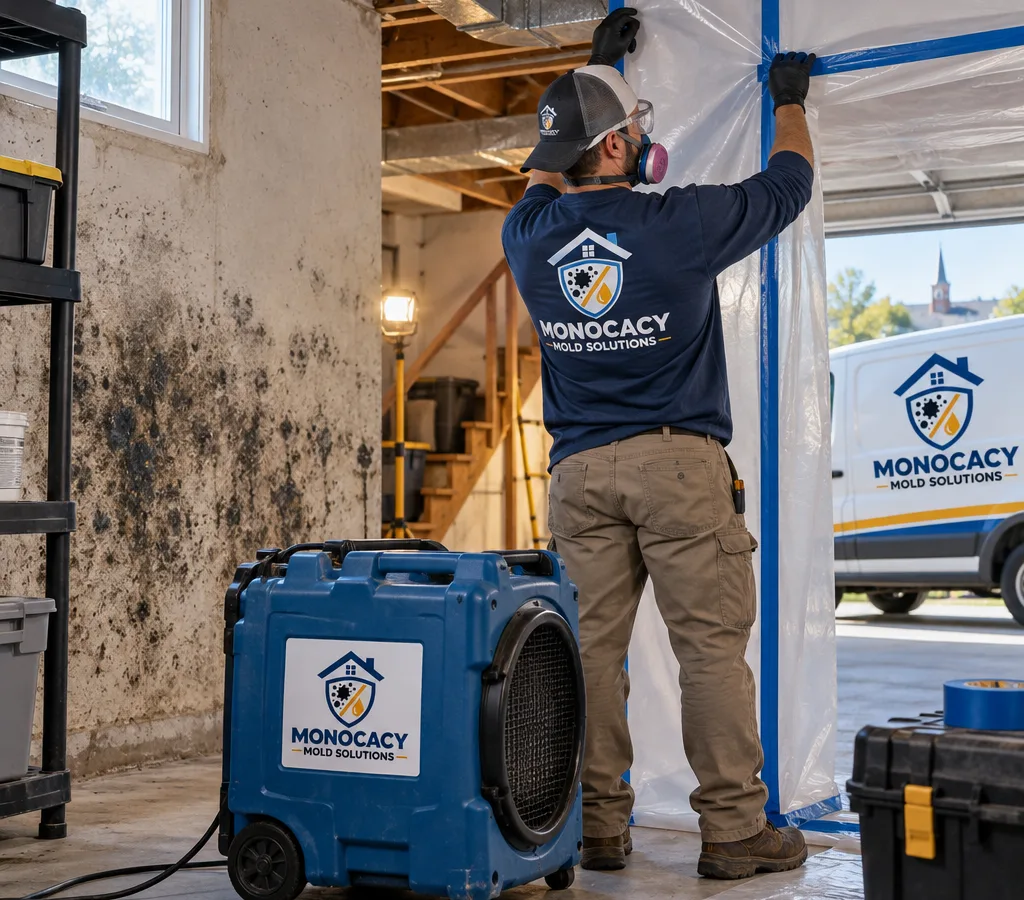
Serving Frederick homeowners with containment, careful material removal, detailed cleaning, and practical moisture recommendations.
Mold problems rarely stay confined to one spot. What looks like a small patch on drywall can connect to damp insulation, framing, or a basement corner that stays humid. For mold removal Frederick homeowners can rely on, we start by identifying the moisture driver, then remove affected materials or clean salvageable surfaces using methods designed to keep spores from spreading.
Our work is focused on practical outcomes: safer indoor air, dry building materials, and a straightforward scope you can understand before any demolition starts. Whether the issue started with a plumbing leak, a wet basement, or long term humidity, we approach mold removal Frederick MD properties need with the same priorities: containment, careful removal, and verification steps that match the situation.
Assessment, removal, and remediation support for homeowners who need the right next step.
Targeted testing and a written assessment to confirm where mold is present, what conditions are driving it, and what a reasonable cleanup plan looks like for your home.
Professional removal and cleanup for homes in the Fredericksburg area, with containment and disposal practices suited to occupied properties.
Remediation work that addresses both impacted materials and the moisture conditions that allow regrowth, with clear next steps after the job is complete.
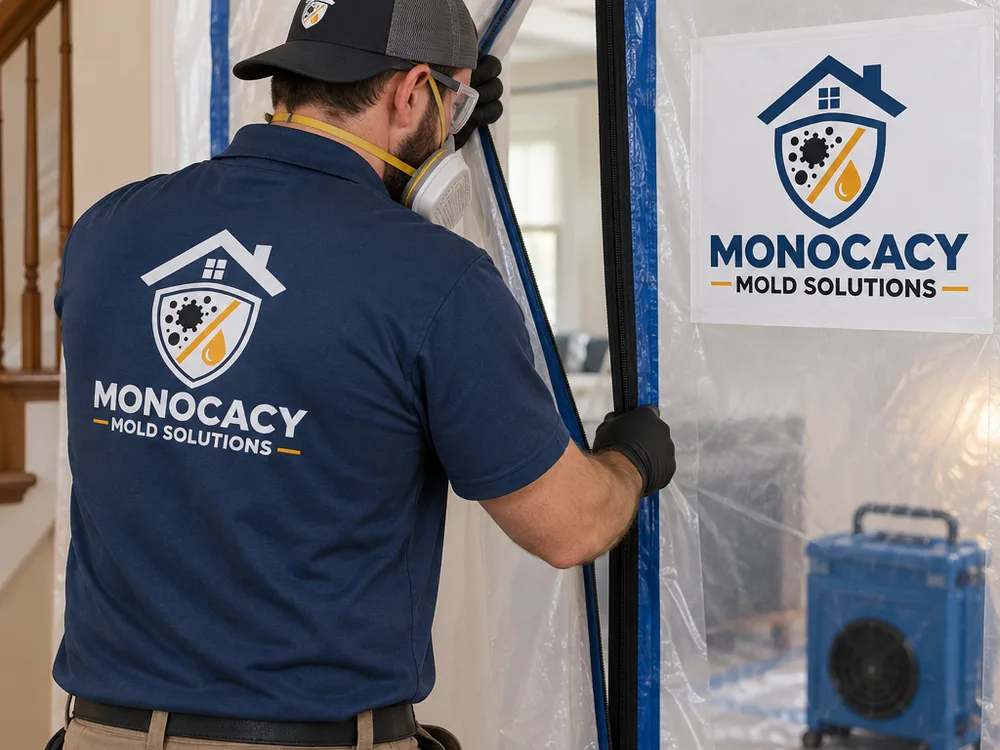
We set up plastic barriers, negative air, and controlled entry when needed so disturbed spores stay isolated. The goal is to keep clean areas clean, especially when living spaces connect to basements or crawlspaces.
Porous materials like drywall, insulation, carpet padding, and some ceiling tiles often cannot be reliably cleaned. When removal is required, we cut back to sound material and bag out debris for proper disposal.
We use HEPA vacuuming and damp wiping on framing, sheathing, and other structural surfaces where mold can cling. Air filtration helps reduce airborne particles while work is underway and during final cleanup.
Mold keeps returning when the moisture problem is left in place. We look for common drivers like slow plumbing leaks, roof or flashing issues, grading and drainage problems, and basement humidity patterns.
After removal, you need to know what comes next. We outline what was removed, what areas were treated, and what repairs are typically required so your contractor can restore walls, flooring, or insulation confidently.
Monocacy Mold Solutions provides mold removal services for homes in Frederick, Maryland.

We focus on doing the job in the right order: isolate the work area, remove or clean affected materials based on what can be salvaged, and recommend the practical moisture fixes that help prevent regrowth. Homeowners often reach out after a basement water event, a persistent musty smell, or visible growth around windows, bathrooms, and utility rooms.
You will get straight answers about what needs to be removed, what can be cleaned, and what is likely to be outside the mold scope (like unrelated remodeling). If you are selling a home or preparing for a renovation, we can also coordinate timing so cleanup and repairs stay on track.
Mold removal in Frederick typically ranges from about $800 to $3,500 for many residential projects. A small, contained area with limited removal is often $800 to $1,500, while a larger basement or multi room cleanup with containment and material removal can run $2,000 to $6,000+.
Final pricing depends on affected square footage, where the growth is located (attic, crawlspace, behind drywall), how much demolition is required, access, and what caused the moisture. The exact cost is confirmed after an on site assessment of the affected areas.
We review visible growth, staining, and odor areas, then check likely trouble spots like behind baseboards, under flooring edges, and around plumbing penetrations to understand the real extent.
We isolate the work zone using barriers and HEPA filtration when appropriate for the location and severity. This step limits cross contamination while materials are being removed or cleaned.
We remove unsalvageable porous materials and perform detailed cleaning on structural surfaces that can be retained. All debris is handled to keep dust and particles controlled.
We verify the area is dry enough to rebuild and point out the most likely moisture sources to address, such as ventilation improvements or repair needs around leaks and drainage.
We complete HEPA vacuuming and wipe down, then document what was done so you have a clear record for property files, contractor coordination, or next steps.
If you suspect hidden mold after a leak or flooding, getting the scope right early can prevent repeated tear outs and extra repairs.
Call for a Free EstimateWe provide mold removal across Frederick, with common calls coming from neighborhoods where basements, older construction, and humidity management play a big role.
Older buildings and renovations can hide moisture paths behind plaster, brick, and finished basements, so careful containment and selective removal are important during cleanup.
Many homes have finished lower levels and mature landscaping. Basement humidity and intermittent seepage can lead to recurring musty odors that need both removal and moisture control steps.
Townhomes and single family homes with shared walls and tight mechanical rooms can develop mold around HVAC condensate, water heaters, and small leaks that go unnoticed until odors show up.
Areas near streams and low lying lots can deal with damp crawlspaces and basement moisture after heavy rain, where mold growth often starts along framing and insulation edges.
Newer construction can still see mold when ventilation is poor in bathrooms or laundry areas, or when small supply line leaks wet drywall before staining becomes visible.
“We had a musty basement smell that kept coming back. The crew explained what was actually wet, set up containment, and the cleanup was noticeably more thorough than the quick spray jobs we were quoted elsewhere.”
“After a small plumbing leak, they found damp drywall behind the baseboards and walked us through what needed to be removed versus what could be cleaned. The scope was clear and the house stayed tidy.”
“Communication was the difference for us. We knew what areas were affected, what the plan was each day, and what to fix so it would not return.”
Start times depend on current workload and the size of the affected area, but urgent situations after a leak or flooding are prioritized when possible. Share when the water issue happened and which rooms are affected so we can schedule the right type of visit.
Many projects can be completed with you at home when containment and air control are appropriate for the location. If the mold is in a main living area or requires extensive removal, we will discuss practical occupancy and safety options before work begins.
Yes, mold removal often requires opening up cavities where moisture traveled, especially after slow leaks. We use controlled demolition and containment so affected drywall, insulation, or flooring layers can be removed without spreading dust through the house.
Yes, we look for the moisture source as part of planning the cleanup, since removal without moisture correction often leads to regrowth. Common drivers include plumbing leaks, roof leaks, condensation at HVAC or ductwork, and basement humidity issues.
If it is safe, keep the area closed off and avoid scrubbing or running fans directly on visible growth, which can disturb spores. If you can, note when the problem started and any recent leaks, overflow events, or high humidity periods to help guide the assessment.
Yes, we can help address mold concerns that come up during inspections by providing a clear scope of work and documentation of what was removed and cleaned. Coordinating early helps keep repair timelines realistic for sellers, buyers, and contractors.
Tell us what you are seeing and where it is showing up. We will review the situation, outline the safest approach for your home, and provide a written plan for removal and prevention.